


Karrot: Buy & sell locally
4.2954.00 Reviews
App Specs
- Version
- 26.34.1
- Updated On
- License
- Free
- Downloads
- 10,000,000+
- Developer
- Danggeun Market Inc.
- Categories
- Social
- Platform
- Android, iOS
Screenshots


 Analysis by AppCompare
When I’m sorting through things I no longer use, the tricky part is often finding a buyer without turning the sale into a long-distance shipping job. Karrot: Buy & Sell Locally is built around nearby exchanges, so it can make sense when I want to pass something on to someone in my community. I find it most useful when I treat it as a practical local marketplace rather than expecting every listing to sell quickly or every conversation to lead to a deal.
A local routine that keeps listings manageable
My simplest approach is to list only items I can describe clearly and hand over without complications. Before opening the app, I gather the item, check its condition, and take a few honest photos in good light. That small bit of preparation makes the listing easier to understand and cuts down on messages asking for basic details.
For example, if I’m selling a chair, I’d mention visible wear and give a useful sense of its size rather than relying on a vague description. For clothing, I’d be clear about condition and fit details I can verify. A buyer who knows what they’re considering is more likely to arrange a practical meetup, and I’m less likely to spend time correcting a misleading first impression.
Once a listing is live, I check messages when I can respond thoughtfully instead of leaving several conversations hanging. If someone asks whether an item is available, I answer directly; if they ask about a mark or a measurement, I check rather than guess. This is a better habit than rushing through replies, especially when local buyers may be trying to coordinate around work, errands, or travel.
Choosing what belongs on a neighborhood marketplace
The local format is a natural fit for things that are awkward to ship, such as household items, furniture, or a bundle of belongings that would be cumbersome to pack. It can also suit low-cost purchases where arranging a nearby handover feels simpler than comparing delivery options. I would not assume every category has the same amount of activity, though: what is available depends on the people listing items in the area.
I’d be more cautious about using a neighborhood app for an item that needs specialist grading, a formal warranty, or a carefully documented transaction. A dedicated retailer or a specialist marketplace may be better when expert condition checks, returns, or a wider selection matter more than proximity. Karrot’s strength is the local exchange, not replacing every other way to buy and sell.
It also helps to decide what a successful sale means before setting a price. If clearing space is the priority, a realistic asking price may matter more than holding out for the highest possible amount. If an item is valuable or unusual, I would take more time to compare comparable listings and answer questions carefully. Either way, I avoid describing an asking price as a guaranteed market value: a listing only tells me what a seller hopes to receive.
Worth Reading Before You Choose

Baby Panda World Brings Quick Play to Modern Phones, but Its Game Library Feels Busy

ESPN’s Live Game View Makes Following Close Games Easier

QuizzLand Review: A Good Fit for Short Trivia Breaks, Not Every Player

Basketball Stars: Multiplayer Is Fast, but Can It Recover When Matches Go Wrong?

WEBTOON Turns Phone Updates Into a Better Reading Routine

Link to Windows Runs on Shared Habits, Not Social Feeds
Using the conversation to avoid wasted meetups
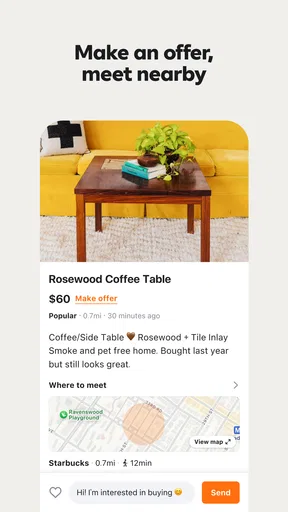
Messaging is most useful when I use it to settle the practical details before leaving home. I confirm that the item is still available, clarify any condition questions, and agree on a time and a public meeting place. For a bulky item, I also check that the buyer understands its size and can handle the pickup. Those simple checks reduce the chance of a wasted journey without making the exchange feel like a formal negotiation.
I don’t treat a friendly tone as proof that a transaction is safe. A local sale still involves meeting someone I may not know, so I follow the app’s safety guidance, choose a public setting, and avoid sharing unnecessary personal details. If a plan changes in a way that makes me uncomfortable, I’m comfortable postponing or walking away. Convenience is useful, but it is not worth ignoring my judgment.
For buyers, I would ask about the details that matter to the item rather than send a generic message. If I’m considering a lamp, for instance, I’d ask whether it works; for a table, I’d ask about dimensions and visible damage. This helps me decide whether a meetup is worthwhile and gives the seller a clear question to answer. It is also a practical way to distinguish a serious conversation from an exchange that is going nowhere.
Small habits that make repeat use easier
When I have several things to sell, I prepare the descriptions and photos in one sitting, then post items when I can keep an eye on replies. That is more manageable than creating a rushed listing whenever I happen to notice something in a cupboard. I also keep a brief note of which items are listed, so I remember to update or remove a listing if the item is no longer available.
For a buyer, saving a little time means being specific about the search rather than scrolling aimlessly. I look for the kind of item I actually need, then compare condition, location, and the information the seller has included. If a listing leaves an important question unanswered, I ask before arranging a meetup. This is especially useful for second-hand purchases, where two items that look similar in a photo may differ considerably in wear or usefulness.
I would also avoid making too many tentative arrangements at once. Local exchanges depend on people following through, and agreeing to several possible meetups can create confusion for both sides. A clear message, a confirmed plan, and a prompt update if circumstances change are simple courtesies that make the community experience better.
What the local focus does—and does not—solve
Karrot’s neighborhood approach can make a handover feel more convenient than arranging postage through a broad marketplace, but it does not guarantee a quick sale or a perfect match. A smaller nearby pool may mean fewer choices for a niche item, and a buyer may need patience if the exact thing they want is not listed. When selection matters more than meeting locally, a larger general marketplace can be the more practical place to look.
Likewise, location does not automatically establish trust. Reviews and community signals can help me form an impression, but I still pay attention to the conversation and the agreed arrangements. I would not treat a positive profile as a substitute for checking an item or meeting sensibly. The app can support a local transaction; the people involved still need to make sound decisions.
There is also a real trade-off between convenience and time. Answering questions, coordinating schedules, and arranging a handover takes effort, even when the app makes the listing process approachable. If I only have one inexpensive item and would rather avoid messages altogether, donating it or using a simpler disposal option may suit me better. If I have several usable belongings and can meet nearby buyers, the effort is easier to justify.
Who I’d recommend it to
I’d recommend Karrot to someone who regularly declutters, likes finding second-hand household goods, or prefers arranging a nearby handover instead of packing and shipping. It is especially appealing if you are comfortable messaging people and can be flexible about timing. A person moving home may find it helpful for offering several useful items to local buyers, while someone furnishing a room on a budget may appreciate browsing what is available nearby.
I’d suggest skipping it, or pairing it with another option, if you need guaranteed availability, nationwide choice, formal purchase protections, or a highly structured checkout. It is also a poor fit if you cannot manage pickup arrangements or do not want to communicate with individual buyers and sellers. Those are not flaws unique to Karrot; they are part of the give-and-take of local peer-to-peer exchanges.
For a first transaction, I’d keep the stakes low: choose an ordinary item, ask the questions that matter, agree on a public meeting place, and see whether the local format suits you. That gives a clearer sense of the effort involved than browsing listings alone. If the exchange goes smoothly, the same habits make it easier to use the app again without turning every sale into a project.
Getting Started with Karrot
Jumping into the world of Karrot is a breeze. After downloading the app, I was greeted with a clean and inviting interface that made me feel right at home. Setting up an account was as easy as pie, with options to sign up using email or social media. I chose the Facebook route and was up and running in no time.
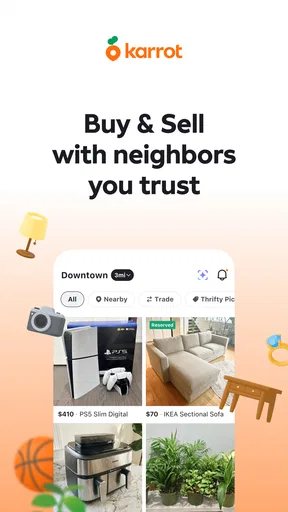
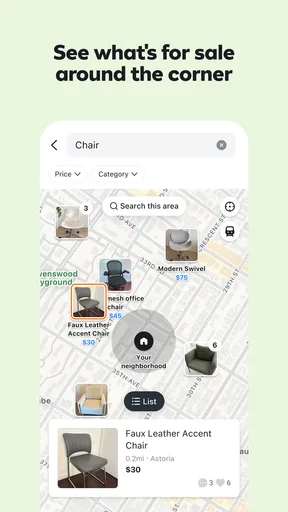
Once inside, the app uses your location to show items being sold nearby. This local focus is a game-changer, allowing you to buy and sell with people in your community. It's all about keeping it local, and I love that! Plus, it adds a layer of trust, as you're likely dealing with neighbors rather than strangers from far away.
Browsing and Buying
Browsing through listings on Karrot is like diving into a treasure trove of goodies. The app categorizes items neatly, making it easy to find what you're looking for. Whether you're hunting for furniture, electronics, or even a quirky piece of decor, chances are, you'll find it here.
What caught my eye was the simplicity of the buying process. You can chat directly with sellers to ask questions or negotiate prices. It felt personal, almost like chatting with a friend, and that's something you don't get with big online marketplaces.
Selling Made Easy
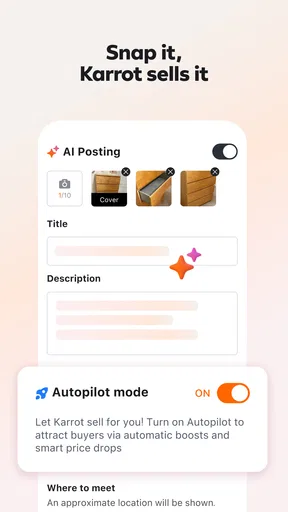
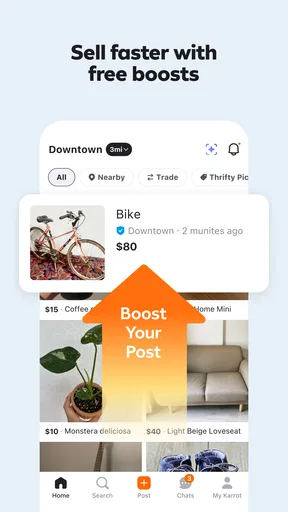
Selling on Karrot is just as straightforward. I decided to declutter my closet and list a few items. The app guides you through the process, prompting you to add photos, a description, and set a price. And don't worry if you're not a wordsmith; the simple interface makes it easy to create a compelling listing.
Once my items were listed, I received inquiries almost immediately. The built-in messaging system is efficient, and I appreciated the option to meet buyers in person. It adds a personal touch and, let's be honest, who doesn't love a bit of human interaction in this digital age?
Safety and Community
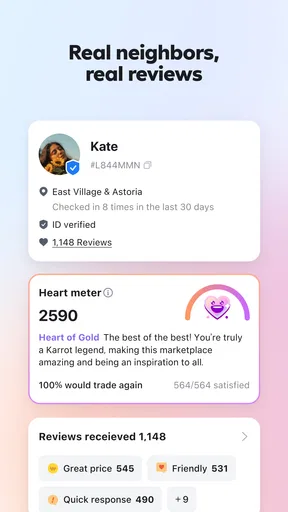
One thing that stood out to me was Karrot's emphasis on safety. The app encourages users to meet in public places and offers tips to ensure secure transactions. There's also a community feature where users can leave reviews, helping to build trust within the platform.
I felt a real sense of community using Karrot. It's not just about buying and selling; it's about connecting with people around you. The app even has a feature for sharing community news and events, which is a nice touch.
Final Thoughts
In a world filled with online marketplaces, Karrot: Buy & Sell Locally stands out by bringing the experience back to the local level. It's user-friendly, safe, and genuinely fun to use. Whether you're looking to make some extra cash or find a hidden gem, Karrot is worth a try.
So, if you're ready to dive into the world of local buying and selling, give Karrot a go. You might just find it as addictive as I did!
Pros
- User-friendly interface for easy navigation.
- Strong community focus enhances trust.
- No listing fees for sellers.
- Localized transactions reduce shipping hassles.
- In-app chat for seamless communication.
Cons
- Limited to local transactions only.
- Fewer users in rural areas.
- No buyer protection program.
- App notifications can be overwhelming.
- Limited payment options available.
FAQs for Karrot: Buy & sell locally
What is Karrot and how does it work?
Karrot is a mobile application designed for buying and selling items locally. It connects users within the same community, allowing them to trade items directly without the need for shipping. Users can post items they wish to sell and browse listings in their area to find deals. The app emphasizes community trust, featuring user profiles and ratings to ensure safe transactions.
Is Karrot available for both Android and iOS?
Yes, Karrot is available on both Android and iOS platforms. Users can download the app from the Google Play Store for Android devices or the Apple App Store for iOS devices. This ensures that users can access the platform regardless of their mobile device preference.
How does Karrot ensure user safety during transactions?
Karrot prioritizes user safety by implementing a community-based rating system. Users can leave reviews and rate each other after transactions, promoting trustworthy interactions. Additionally, the app encourages users to meet in safe, public places for exchanges and provides in-app messaging to facilitate secure communication without sharing personal contact details.
Are there any fees associated with using Karrot?
Karrot does not charge users any fees for listing items or completing transactions. The app is free to download and use. However, users should be aware of potential costs associated with meeting buyers or sellers, such as transportation or parking fees, which are not covered by the app.
What types of items can be bought and sold on Karrot?
Karrot allows users to buy and sell a wide range of items, including electronics, clothing, home goods, and more. The platform encourages users to list items that are in good condition and comply with local laws and regulations. Some prohibited items include weapons, illegal substances, and counterfeit goods.


